Sports Science
Improving Sprint Speed: A Science-Based Approach
From the FASTER syllabus: this article is taught in full in The Speed for Sport course →
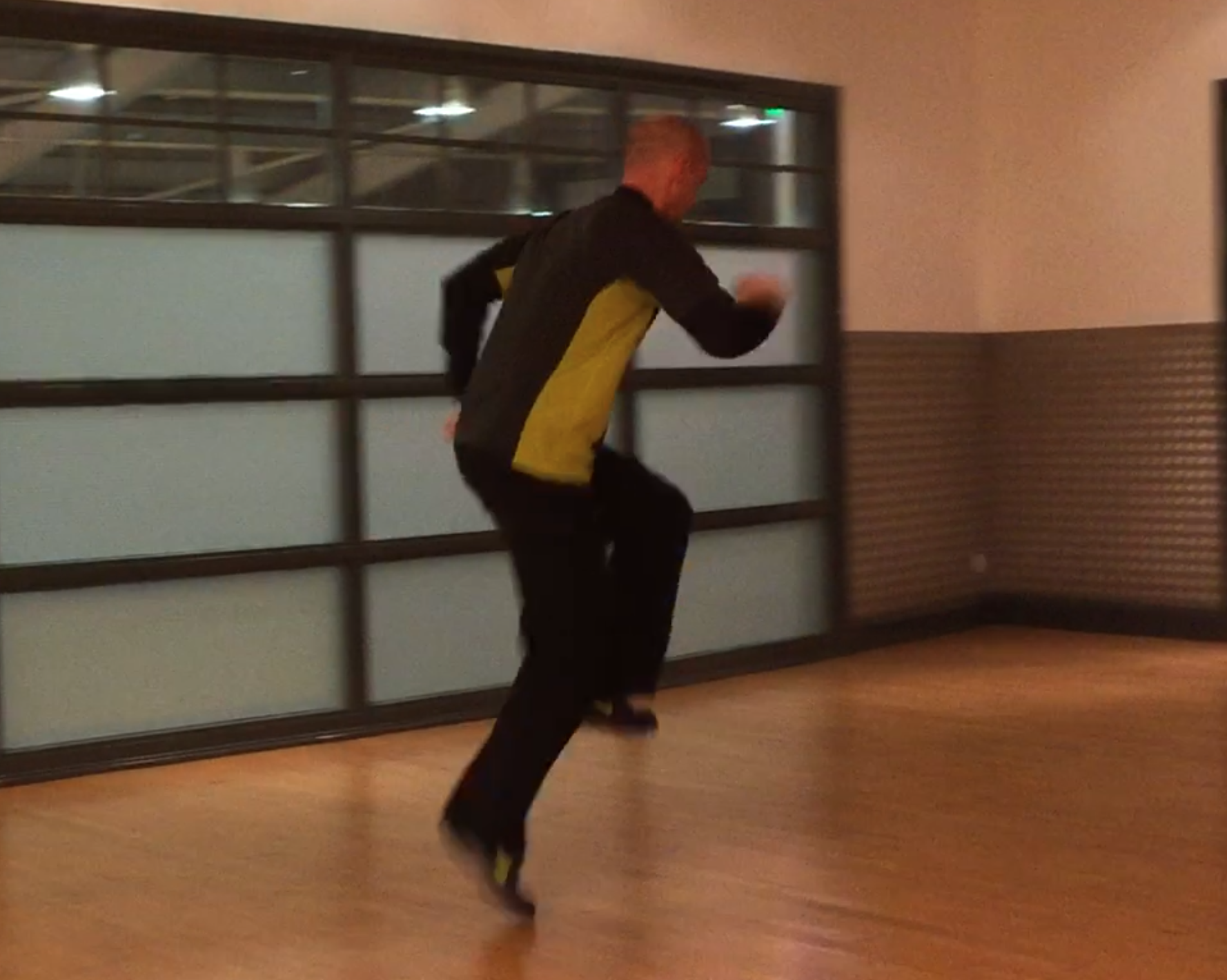
In short: Sprint speed breaks into acceleration, top speed and speed endurance, each trained differently — but faster running also depends on reflexes, leg stiffness and running efficiency, which is why FASTER coaches with a dynamic-systems model rather than a one-size-fits-all program.
Sprinting is a complex motor skill built on strength, power, flexibility and coordination. But recent research points to more than the obvious physical attributes: reflexes and running efficiency matter too.
It helps to split sprinting into three components — acceleration, top speed and speed endurance. Which one matters most depends on the sport. In team sports with short, rapid sprints, acceleration dominates; an 800m runner is all about speed endurance.
The stages of sprinting
Acceleration
Acceleration is where the runner builds speed from a stationary or moving start. It's characterised by a forward lean and powerful strides driving the centre of mass forward. Research is clear that lower-body strength and power are vital here — the ability to generate force and convert it into forward motion through a stiff upper body.
Drills to develop it:
- Slight incline sprinting
- Band-resisted sprint starts
- Partner-resisted sprint starts
Exercises that may carry over: single-leg squats, hops and squat jumps. Traditional strength and power work can also help the amateur runner.
Top speed
Once past maximum acceleration, the runner transitions to top speed — upright running with rapid leg turnover. Stride frequency and length are the key determinants, and top speed depends heavily on the nervous system's ability to allow that frequency. To improve it, overspeed training appears to be the best tool a coach has.
Drills to develop it:
- Band-assisted sprinting
- High-speed treadmill running (be safe)
- Slight incline running
Speed endurance
Speed endurance is holding top speed for as long as possible — a mix of aerobic and anaerobic fitness with efficient mechanics. High-intensity interval training is an effective method, using intervals to target the energy systems and raise the aerobic and anaerobic thresholds. Efficient running style matters too, so you'd programme intervals off form and RPE or heart rate to call rest. As always, it depends on the athlete's goal.
Reflexes, stiffness and efficiency
Beyond mechanics, reflexes play a real role. The slip reflex helps maintain balance when a slip is detected, rapidly contracting muscles to stabilise you — and it may partly initiate the return of the rear leg. The cross-extensor reflex extends the opposite limb when one is withdrawn, helping balance during the rapid alternating leg action of sprinting. Franz Bosch argues this is the power behind the back-leg push he calls "positive running".
Running efficiency — the least energy for the greatest speed — leans on muscle and joint stiffness. A degree of stiffness is good: it transfers force to the ground efficiently, and runners with greater leg stiffness tend to be faster. When athletes return from injury or a layoff they often slow "down" rather than "up" — more time on the floor, more wasted energy. A better response is to travel slower by bounding. Drills that involve bounding, combined with positions that challenge stiffness in the torso, tend to build efficiency, and they're the type FASTER reaches for.
Dynamic systems and motor learning
Dynamic systems theory says complex skills like sprinting aren't run by a central "motor program" — they emerge from the interaction of the muscular, nervous and skeletal systems. Schema theory (skill as motor programme) is the more common language in sports performance, but its reasoning can lead a coach to miss the subtle tweak a client needs. FASTER has moved to a dynamic-systems model for teaching programme and exercise design.
In short, a dynamic-systems approach:
- Treats learning as a non-linear process shaped by the individual, the task and the environment.
- Values variability in practice for more adaptable, robust skills.
- Exposes athletes to a wide range of conditions to prepare for the unpredictable.
- Promotes self-organisation — athletes adapting from the feedback their performance gives them.
- Avoids prescriptive, one-size-fits-all coaching, building environments where athletes find their own solutions.
- Prizes intrinsic motivation and autonomy.
- Sees learning as long-term, with progress and regression, so patience matters.
- Seeks a balance of stability (consistency) and flexibility (adaptability).
Applied to sprinting, that might mean varying the incline, the stride length or the speed and watching how the runner's mechanics respond.
A sprint training template
This is a skeleton — the coach adds the variables and tools each client needs.
Acceleration, weeks 1–2: 10 × 20m sprints, explosive starts, 2 min rest; then 5 × 40m maintaining speed after the initial acceleration, 3 min rest.
Acceleration, weeks 3–4: 8 × 30m, explosive starts held longer, 2 min rest; then 4 × 50m maintaining speed, 3 min rest.
Top speed, weeks 1–2: 5 × 60m reaching top speed, 3 min rest; then 3 × 80m holding it, 4 min rest.
Top speed, weeks 3–4: 4 × 70m reaching and holding top speed, 3 min rest; then 2 × 100m holding it, 5 min rest.
Improving sprint speed isn't just running faster. It's understanding reflex-driven movement, running efficiency and dynamic-systems learning, then building a programme around the individual in front of you.
References and further reading
- Weyand et al. (2000). Faster top running speeds are achieved with greater ground forces not more rapid leg movements. J Appl Physiol, 89(5), 1991–1999.
- Morin et al. (2012). Mechanical determinants of 100-m sprint running performance. Eur J Appl Physiol, 112(11), 3921–3930.
- Laursen & Jenkins (2002). The scientific basis for high-intensity interval training. Sports Med, 32(1), 53–73.
- Zehr & Duysens (2004). Regulation of arm and leg movement during human locomotion. Neuroscientist, 10(4), 347–361.
- Seifert, Button & Davids (2013). Key properties of expert movement systems in sport. Sports Med, 43(3), 167–178.
- Bosch, F. (2015). Strength Training and Coordination: An Integrative Approach.
You just read one answer. The course is all of them.
The Speed for Sport course: every answer marked by a real tutor, with free return access for life. The price is on the page, payment plans at checkout, no sales calls.
What every FASTER student gets
Built around you, not around the course
- A real person marks every answerEvery answer is read and marked by a tutor, with written feedback.
- Marked as you goEach teaching point is marked as you answer it, not at the end of the module.
- Dictate instead of typeA microphone on every written answer: say your answer and it types it for you (Chrome, Edge and Safari).
- Listen to the lessonsVoice-overs on the lessons, and the audio to download.
- Built for the way your brain worksShort lessons, one point at a time, marked as you go, with the choice to listen, read, print or speak your answers.
- Streaks that never punish youYou set how many days a week you want to study. Miss a day and your streak pauses; it is never lost.
- Accessible to WCAG AA, with an AAA optionEvery page measured against the WCAG accessibility standard: no faults at level A or AA, with a skip link, screen-reader labels and pages that hold together zoomed to 400%. A high-contrast option takes it to AAA.
- Keep it plainOne switch turns off the extras, the streaks, the badges, the celebrations and the movement, so the site stays plain and calm. Switch them back on whenever you like.
- Bigger text and wider spacingTwo steps of bigger text, and more room between lines, words and letters, on every page.
- Calmer motionOne switch stops animations and videos that play on their own. It is on already if your phone or computer asks for reduced motion.
- A personal video lessonWhen an answer needs real explaining, your marker records a video that lands in your course.
- A note before you sendBefore you send, the page tells you if your answer copies the lesson word for word, so you can put it in your own words.
- The skeleton and muscle labsTap any bone on the skeleton, and see the muscles light up on the model.
- Print the notesPrint the lessons and go old school.
- Case studies on your phoneBuilt into the site, saved as you go, there on your laptop when you sit down.
- Pin it to your home screenNo App Store and no Google Play. It is just there.
- No resit feesWork sent back is a chance to add more, with no resit fee.
- Return access for lifeQualify once and come back to the content whenever you need it.
- PT Manager from day onePT Manager is yours to learn on from the day you sign up. Using it with real clients comes once you hold your Level 3 and are listed on the FASTER Trainer Register.
- The FASTER Trainer RegisterA free listing on the Register once you qualify.
- Your certificates in one placeEvery course and its certificate on one page.
- Ask JohnThe Ask John button on every page, and his WhatsApp.
And PT Manager, free
51 tools to run your business, with no monthly fee and no cut of your money
PT Manager is yours to learn on from the day you sign up. Using it with real clients comes once you hold your Level 3 and are listed on the FASTER Trainer Register.
See all 51 tools
Set-up
- Import clients Bring a whole client list across in one go.
- My quotes Daily lines your clients see — yours, not stock.
- Programme templates The programme shapes you reuse — a session or twelve weeks. Pick one for a client, get your own copy.
- Exercise library Every exercise with FASTER coaching detail.
- Money Products, payments and who owes what.
- Send from your own email Connect your own email service so invites arrive from you, on your domain.
- My brand & client view What your clients see when they walk in — views, header, accent, logo.
- Your enrolment pack What every new client gets the moment you enrol them — your forms, ours, or a mix.
- Products and services What you sell — blocks, packages, memberships and one-offs, with their prices.
- Insurance Your policy on record — provider and expiry. Client features unlock while it is valid.
- My menu Switch any tool on or off — for your menu, your home and your whole account.
- Your website A free website on your own web address, filled from PT Manager. Or just the client sign-in door on your domain.
- Your public page Your verified Trainer Register listing, linking out to your own site and socials.
Business day to day
- Clients Your client list — invite, open a client, manage their space.
- Clubs Group your clients — a board they share, a programme or a monthly price if you want one.
- Challenges A dated push everyone logs against — for everyone you train, or for one club.
- Calendar Sessions, classes, capacity and bookings.
- Reminders The dates your business can't let lapse — insurance and first aid, nagged ahead of time.
- Nudges Who needs a nudge today — opportunities, one tap each.
- Who needs chasing Every conversation about money, in the order to work through them.
- What needs doing Your own list, in your own words — the jobs you keep meaning to get to.
- Till Sell at the desk — cash, card or on their phone — and download the sales sheet.
- What you are making What is coming in every month, what was paid in the last 30 days, and what sells.
Templates and systems
- Forms & interviews PAR-Q, consent, consultations and your own forms.
- Coaching room The coaching tools shelf — wheels, journeys and resources in one place.
- Radar wheels Build a life or performance wheel a client fills in — see change over time.
- Nutrition by FASTER Nutrition sheets and habits without meal-plan pretence.
- Pathways Automated coaching journeys you assign to clients.
- Programmes Start a programme — a session, a month, 12 weeks or a season — and find the ones you have built.
- Games & drills planner Build game-based sessions and drills.
- Sport screens Pick a sport — the shots to film, the analyser, and a ready-made radar of the qualities that matter.
- Movement screen → radar Read joint angles off the analyser — they auto-score and fill a radar wheel.
- Assessment builder Build and run client assessments and re-tests.
- Tag analytics Every tag across your clips, grouped and exportable.
Client
- AI prompts Your reusable prompt library for coaching copy.
- Before & after Side-by-side progress comparisons.
Trainer tools
- Exercise generator Fresh exercise ideas from constraints you set.
- FASTER dice & wheel Spin-and-roll session variety for groups and games.
- Movement demonstrator A 3D model of the FASTER movement patterns — body or skeleton view, prime movers lit up, live joint angles.
- Client video analysis Your media library — client folders and your own. Pick a clip to analyse.
- Movement by FASTER (HMAC) Human movement analysis charts — see how a client moves.
- Live analysis Mount your phone and coach live — skeleton, reps, angles and depth in real time.
- Tell a group One thing, to the right people — and you see exactly who it reaches first.
Media centre
- Video builder Reels, stories and client report videos, in your own branding.
- Image builder Branded posts and cards for your socials, at the right size.
- Shot list builder Every shot with its size, angle, lens, location, people, kit and sound; sorted into shooting order, ticked off on the day, printed or sent as a sheet.
- Storyboard builder Plan a video shot by shot: what the camera sees, what is said, the move and the cut.
- Script writer Write what you will say, with the word count and how long it takes to say.
- Teleprompter Read your script off the screen at your speed, and film yourself behind it.
- Video and image organiser Everything you have made and every source you can pull from.
- Ad builder Make your own ads, coached as you go, in your branding. As many as you like, no fee, no cap.
Frequently asked
What are the three components of sprinting?
Acceleration, top speed and speed endurance — their importance shifts with the sport, so short team-sport sprints prioritise acceleration while an 800m runner needs speed endurance.
How do you train acceleration?
Strength and power for the lower body, plus drills like incline sprints and band- or partner-resisted sprint starts.
How is top speed improved?
Through stride frequency and nervous-system turnover — overspeed methods such as band-assisted sprinting work well, done safely.
Why do reflexes matter in sprinting?
The slip and cross-extensor reflexes help maintain balance and, per Franz Bosch, drive the rear-leg push behind 'positive running'.
What is a dynamic-systems approach?
Manipulating constraints — incline, stride length, speed — so efficient mechanics emerge, rather than prescribing one fixed technique.
Reading this for your own training? Every trainer on the FASTER register has been assessed by us — search by town or speciality, free.
Find a FASTER trainer →